
Chemical Smells and Off-Gassing: What Hydroxyls Can Do
Volatile organic compounds are emitted by paint, flooring, furniture, cleaning products and cooking. The EPA has measured them at up to ten times higher indoors than out. They are gases, not particles — which is why the filter in a traditional air purifier was never designed to reach them.
Your house concentrates them
VOCs are gases released by ordinary things: new flooring, fresh paint, furniture, adhesives, air fresheners, cleaning products, dry-cleaned clothes, cooking.
The EPA has measured concentrations of many VOCs consistently higher indoors — up to ten times higher than outdoors. Its TEAM study found a dozen common organic pollutants at two to five times higher levels inside homes than outside, and that held whether the home was rural or in a highly industrial area. The building, not the neighborhood, was the variable.
During and after activities like paint stripping, levels can reach a thousand times outdoor background. And the EPA notes that elevated concentrations “can persist in the air long after the activity is completed.”
You can’t see them, and mostly you can’t smell them. But that doesn't mean they don't affect you.
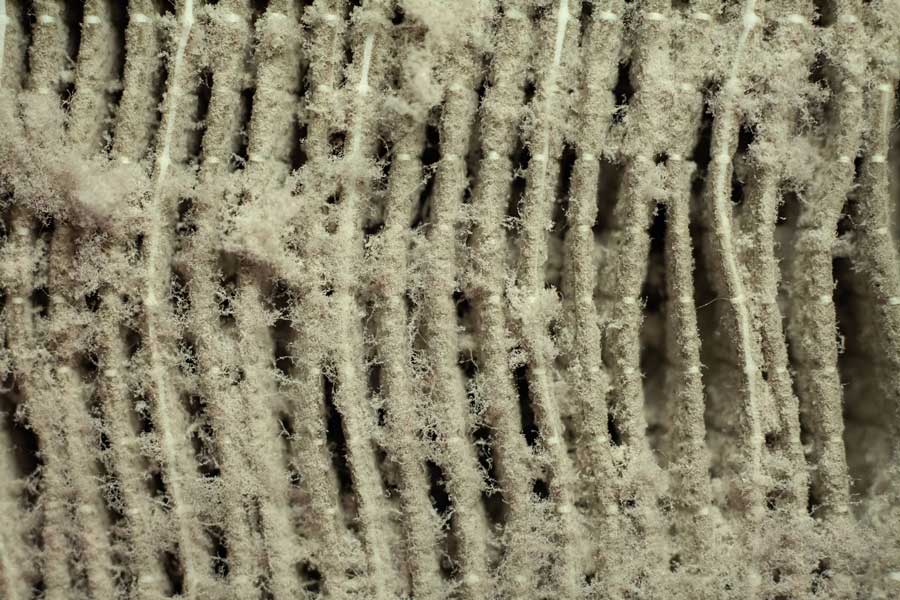
A filter was built for a different job
This isn’t a criticism of filters. They aren't built to handle VOCs.
The EPA puts it plainly: “most filters are designed to filter either particles or gases.” A HEPA filter is a particle filter, and the rating that comes with it — CADR — is, in the EPA’s words, “for particles only.” For gases, the EPA tells you to look for a different device entirely: activated carbon, which works by adsorption, and can quickly become saturated and lose effectiveness, without any warning. That's why hydroxyl technology is so important.
VOCs matter not only because they are toxic by themselves. In chamber work published in Atmospheric Chemistry and Physics, researchers exposed human lung cells to particles alone, then to the same particles after they had been in contact with gas-phase VOCs. The VOC-modified particles caused significantly more damage and inflammation than the original particles did. The gases didn’t just sit alongside the particles. They changed what the particles did.

What hydroxyls do to a VOC
Hydroxyl radicals are how the atmosphere disposes of organic gases and VOCs. A hydroxyl takes a hydrogen atom from the VOC molecule; that breaks the molecule apart and starts a chain that ends in carbon dioxide and water vapor. It is the dominant removal route for most VOCs in outdoor air, and the subject of one of the most-cited reviews in atmospheric chemistry.
The published research
-
VOCs are higher indoors — up to ten times higher
The EPA reports concentrations of many VOCs consistently higher indoors than outdoors, and its TEAM study found a dozen common organic pollutants two to five times higher inside homes regardless of whether the home was rural or industrial.
EPA — VOCs’ Impact on Indoor Air Quality → -
A particle filter is not a gas filter — the EPA says so
“Most filters are designed to filter either particles or gases.” The CADR rating is “for particles only,” and for gases the EPA directs you to activated carbon or another gas-specific filter.
EPA — Guide to Air Cleaners in the Home → -
Hydroxyls are the atmosphere’s main route for removing organic gases
The hydroxyl radical is the main control on the atmosphere’s oxidation capacity; reaction with OH is the dominant daytime removal pathway for most VOCs.
Lelieveld et al., Atmospheric Chemistry and Physics, 2016 →
Atkinson & Arey, Chemical Reviews, 2003 → -
That chemistry runs indoors too — measured in a classroom
Direct measurements found hydroxyl concentrations up to 1.8 × 10⁶ molecules per cm³ in a school classroom — the same order of magnitude as outdoor urban air. Indoor hydroxyl formation had previously been ignored.
These were hydroxyls occurring naturally from sunlight, not from a device. The study establishes the chemistry indoors, not our unit’s performance.
Gómez Alvarez et al., PNAS, 2013 → -
Gases change what particles do to lung cells
Human lung cells were exposed to particles alone, then to the same particles after contact with gas-phase VOCs. The VOC-modified particles caused significantly more damage and inflammation than the original particles.
Ebersviller et al., Atmospheric Chemistry and Physics, 2012 → -
Ventilation and source control come first
The EPA’s order for indoor air quality is source control, then ventilation, then air cleaning — and it calls source control “usually the most effective.”
EPA — Improving Indoor Air Quality →
How the WellisAir unit works
-
It releases hydroxyls, with no filter and no UV lamp
A replaceable cartridge reacts inside the unit to release hydroxyl radicals into the room. One cartridge lasts about three months. Nothing to clog, and nothing that loses capacity as it loads up.
-
It works in the room, not just in the airflow
Hydroxyls move through the space rather than waiting for air to reach a filter, so they reach the gases held in carpet, upholstery and soft furnishings as well as the air.
-
A real-time VOC indicator
The light on the front reads the room’s VOC level: red when contaminants are present, yellow while it works, blue when the air is clear.
-
0.006 ppm ozone — one eighth of the legal limit
Intertek, UL 867 Section 40 (2025), against a 0.050 ppm limit. CARB certified and ETL listed, and designed to run in occupied rooms.
The full ozone record →
What we know, and what we’re still testing
What is established: hydroxyl radicals are the atmosphere’s main route for breaking down organic gases, and that chemistry has been measured running indoors at concentrations comparable to outdoor urban air.
What is established about filters: they are built for particles or for gases, not both, and the rating most purifiers advertise covers particles only. That is the EPA’s position.
Where WellisAir fits
WellisAir is one layer, not the whole answer.
The EPA sets out three strategies for indoor air quality, in order: remove the source, improve ventilation, then clean the air. It calls source control “usually the most effective,” and describes air cleaners as supplements to the first two — not replacements for them. For VOCs that order is worth following:
- Remove what’s emitting. Store solvents, fuels and hobby supplies outside the living space. Choose low-VOC paints and finishes. Let new furniture and flooring off-gas before they come indoors where you can.
- Open a window. Ventilation is the cheapest thing that works, especially during and after painting, stripping or heavy cleaning.
- Then treat the gases. That is our part to play — what is left between airings, and what has soaked into soft furnishings. Hydroxyls act on those, continuously, while you live in the room.
VOC questions, answered
Do air purifiers remove VOCs?
Most don’t, and the EPA is direct about why: “most filters are designed to filter either particles or gases.” A HEPA filter is a particle filter, and its CADR rating is, in the EPA’s words, “for particles only.” For gases the EPA points you to activated carbon or another gas-specific approach. Hydroxyls work on the gas side — they break the molecule apart rather than trapping it.
Are VOCs really worse indoors?
Usually, yes. The EPA has measured many VOCs at up to ten times higher indoors than outdoors, and its TEAM study found a dozen common organic pollutants two to five times higher inside homes than outside — whether the home was rural or in a highly industrial area.
What’s that smell in a new house, or after new flooring?
Off-gassing. Paint, adhesives, flooring, furniture, finishes and sealants release VOCs as they cure. The EPA notes elevated levels “can persist in the air long after the activity is completed.”
Does WellisAir remove formaldehyde?
Formaldehyde is one of the most common indoor VOCs, and breaking down VOCs is exactly what hydroxyl radicals do — that chemistry is well established, and it is why hydroxyls are the atmosphere’s main route for removing organic gases. A formaldehyde-specific test of our own unit is on our research list, and we’ll publish it when it’s done.
Should I still run a HEPA filter?
They do a different job — particles rather than gases. It’s worth knowing the two interact: in published chamber work, particles that had been in contact with gas-phase VOCs caused significantly more damage to lung cells than the same particles alone.
How long does off-gassing last?
Weeks to months for new materials, and the EPA notes concentrations persist well past the activity itself. Ventilation helps most; a continuously running unit works on what’s left between airings.
Does it work on surfaces as well as air?
Both. Hydroxyls move through the room rather than waiting for air to reach a filter, so they reach the gases held in carpet, upholstery and soft furnishings.
Is it safe to run continuously?
It’s designed for it — no filter, no UV lamp, ozone measured at 0.006 ppm in Intertek’s 2025 UL 867 test (about one eighth of the legal limit), CARB certified, and under 30 dB.